
BLOG · NEWS
The AfD Victory in Saxony-Anhalt:
Should You Be Worried?
The AfD has become the strongest party in Saxony-Anhalt. But what does that mean for people who want to come to Germany to work? Can a state election change federal migration and employment law overnight? A calm assessment.
Hamza Çakın · IR - Law / Consultant

For the past few days I have been hearing the same question, especially from Turkish citizens living in Germany or planning to move there: “The AfD got 44%, what happens now?” The AfD’s 43.8% in Saxony-Anhalt is not a result to dismiss. It is politically significant, and we will be talking about its consequences for some time. But if you only look at it as “the AfD got 44%”, the picture is incomplete. Taken together, around 56% of voters did not vote for the AfD. In addition, the CDU, SPD, Greens and Die Linke have made it clear that they will not form a coalition with the AfD; the BSW’s position is somewhat different. So being the largest party does not mean the AfD will now govern Saxony-Anhalt on its own. It needs 42 seats for an absolute majority in the state parliament and won 39. The real question now is how a government will be formed.
I say this deliberately, because right after the election social media filled up with comments like “Germany is now closed to Turks”, “work visas will get harder” or “nobody will be let into Germany any more”. It is worth staying calm here. The result of a state election does not change Germany’s federal migration and employment law overnight. Much of residence, employment and citizenship law is set at federal level. The legal routes open today to someone from Turkey who wants to work in Germany have not disappeared because the AfD came first in Saxony-Anhalt. The Opportunity Card, residence permits for employment and the existing skilled immigration system all still apply. Of course the political climate matters: the states have considerable powers in administration, education, policing and certain administrative practices, and a shift in the balance of power may have effects later on. But reading today’s result as if existing legal rights could vanish overnight is not accurate.
Why Did the AfD Get So Many Votes?
This is what we should really be discussing. Explaining the 43.8% simply as “people in Saxony-Anhalt are against immigrants” is too easy. Migration is clearly one of the AfD’s central themes. But a closer look at the electoral map tells a different story: the AfD is strongest in rural areas and smaller towns. In some constituencies it passes 50%, while in the state’s two big cities, Magdeburg and Halle, it stays well below the state average. There is no simple equation based on the share of immigrants. You have to consider many factors together: East Germany’s economic and demographic transformation after reunification, population loss, young people moving away, ageing rural areas and the feeling of many people that they are far from the centres of political power.
Seen this way, part of the AfD vote can also be read as a reaction to the existing political order. The sense that “nobody listens to us” has been a major political theme in parts of eastern Germany for a long time. Worries about the economic future, the gap between cities and the countryside and the historic economic differences between East and West add to this. None of this makes migration unimportant; it simply shows that attributing the AfD’s success to a single cause is wrong.
A Closer Look at Magdeburg and Halle
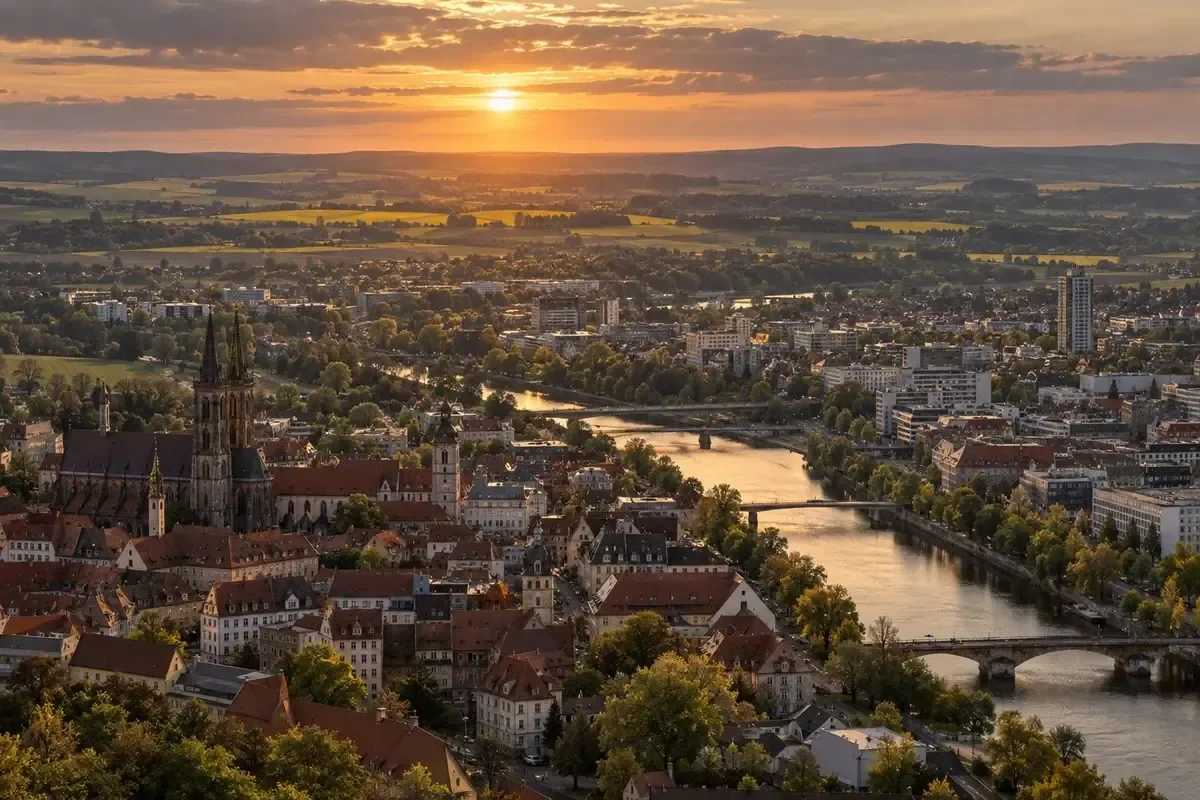
Magdeburg and Halle are especially interesting because they differ in many ways from the rest of Saxony-Anhalt. Magdeburg is the state capital and an important university, industrial and logistics hub, around 150 kilometres from Berlin and a key transport node thanks to the A2 and A14 motorways, rail and waterways. Halle, together with Leipzig, is one of the most important cities in the region and stands apart from rural Saxony-Anhalt with its university, economic dynamism and more cosmopolitan city life. Both cities have an above-average share of foreign residents, and yet the AfD did not reach its statewide 43.8% there.
There are big differences within Magdeburg too: in one constituency the AfD approaches 39%, in another it stays around 24%. Halle is similar, with the AfD above 40% in some areas and below 20% in others. If political preferences vary this much even within a single city, the result cannot be explained with “more immigrants came, so people voted AfD”. There is a relationship worth thinking about between the AfD’s lower results in areas with universities, young people and economic activity and its much higher results in rural areas. That is why it pays to look at where the votes come from, not just the overall share.
What Does This Mean If You Are Planning to Move to Germany?
For me, this is the most important point. In recent days I have seen people questioning their plans because of the election result. I do not see a reason for that at the moment. The AfD coming first in Saxony-Anhalt is a significant political development, but it does not mean the existing routes for people from Turkey are closed. Germany’s federal employment and migration law still applies, and anyone who wants to apply today can still do so under the current requirements.
Of course, political developments in Germany need to be followed. The AfD’s rise can no longer be ignored, and debates on migration, citizenship and integration may become sharper. But you have to separate political rhetoric from the law in force. A party winning many votes is one thing; being able to govern alone is another; and being able to change federal law at will, even in government, is something else entirely.
So my assessment is simple: there is no reason to panic, but no reason to ignore developments either. The result should be taken seriously; downplaying it would be wrong. But saying “the AfD got 44%, so Turks can no longer come to Germany” is not accurate at present. If you are planning to move to Germany, the right step is still the same: work out which legal route fits your education, profession and situation, and pursue your application under the law as it stands.
Politics, election results and governments can change. What matters is telling apart which of these changes actually affect your legal situation. If you would like to clarify which route suits you, we are happy to look at it together in a free consultation.
Sources: Landtagswahl Sachsen-Anhalt 2026 (Wikipedia) · Landeswahlleiter Sachsen-Anhalt · Make it in Germany
This article reflects the author’s personal assessment and does not replace legal advice.